


Belt weigh feeders for continuous gravimetric dosing
The TDG Series Belt Weighfeeders is a new-generation variable-speed quantitative weighing and feeding system developed by Weifang Zhitian. Based on the technical advantages of similar products at home and abroad, combined with years of practical field experience and customer feedback, the TDG Series has been optimized for reliable material feeding, accurate weighing, and stable continuous operation.
Compared with many imported weighing and feeding systems, the TDG Series offers an excellent cost-performance ratio while maintaining high weighing accuracy and dependable operation. These Belt Weighfeeders are widely used for continuous feeding and proportioning of bulk materials in cement, mining, metallurgy, coal and coke, fertilizer, power plants, sintering plants, tobacco, and other industries.
- Zhitian
- Shandong
- 3-5days
- 100PCS
- Information
Product Overview
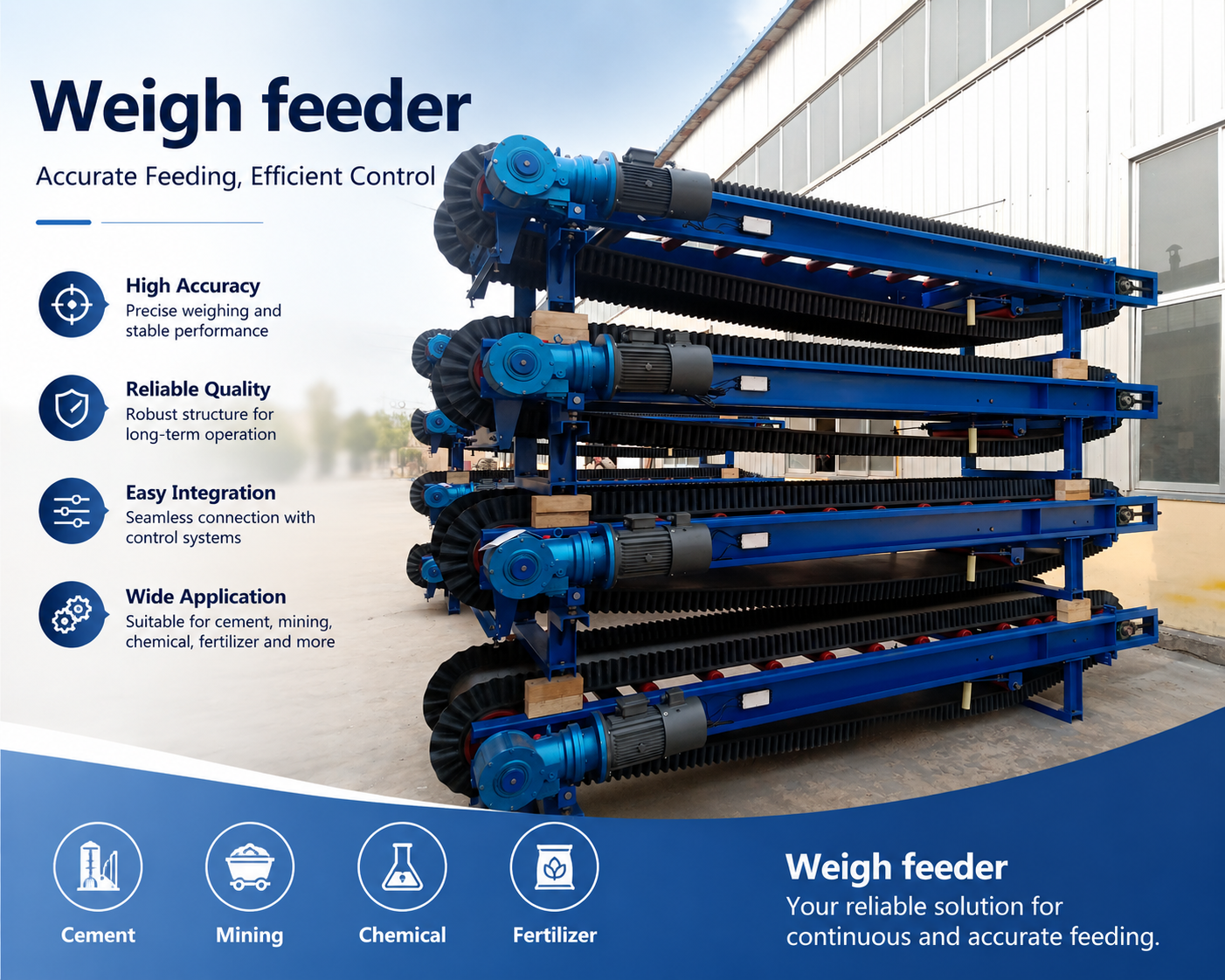
The Belt Weighfeeders is a new-generation variable-speed quantitative weighing and feeding system developed by Weifang Zhitian. Based on the technical advantages of similar products at home and abroad, combined with years of practical field experience and customer feedback, the TDG Series has been optimized for reliable material feeding, accurate weighing, and stable continuous operation.
High-Accuracy Weighing Performance
One of the key advantages of the Belt Weighfeeders is its dual weighing idler configuration. By extending the effective weighing section, the system obtains more stable material weighing signals and improves overall measurement accuracy.
The weighing accuracy can reach better than ±0.5% under suitable operating conditions. The extended weighing section also helps reduce the influence of material fluctuations, belt tension changes, and other factors, providing reliable measurement for continuous process control.
The weighing system uses high-precision stainless-steel tension-compression load cells. These sensors feature high accuracy, low drift, excellent repeatability, and strong overload capacity. They are designed for long-term continuous operation in demanding industrial environments.
Robust and Reliable Belt Feeder Design
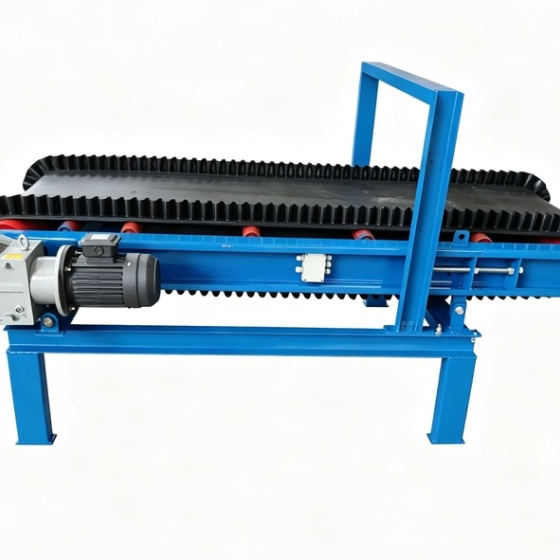
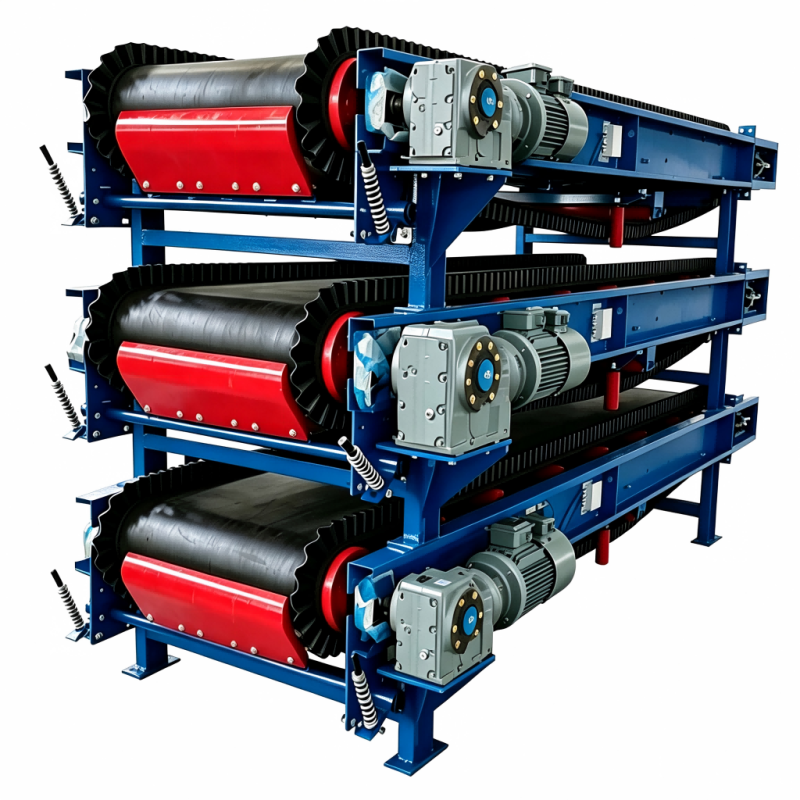
The Belt Weighfeeders use a steel plate bending-formed frame. This structural design provides high mechanical strength while maintaining a clean and compact appearance. The robust frame is suitable for continuous industrial operation and contributes to a long service life.
The feeder is equipped with a skirted conveyor belt to improve material containment and reduce material leakage during feeding. An automatic belt tensioning system maintains appropriate belt tension during operation, while the automatic belt alignment device helps keep the belt centered and improves operating stability.
Complete Weighing and Feeding System
A complete TDG Series Belt Weighfeeders system mainly consists of a feed hopper, feeder body, transmission device, weighing load cells, speed sensor, frequency converter, and control instrument or industrial computer.
The speed sensor continuously detects belt speed, while the weighing load cells measure the material load on the weighing section. The control system combines these signals to calculate the instantaneous material flow rate and total feeding quantity.
The variable-frequency drive enables precise adjustment of belt speed according to the required feeding rate. This allows the Belt Weighfeeders to provide stable and controllable material feeding for different production processes.
Flexible Control and Proportioning
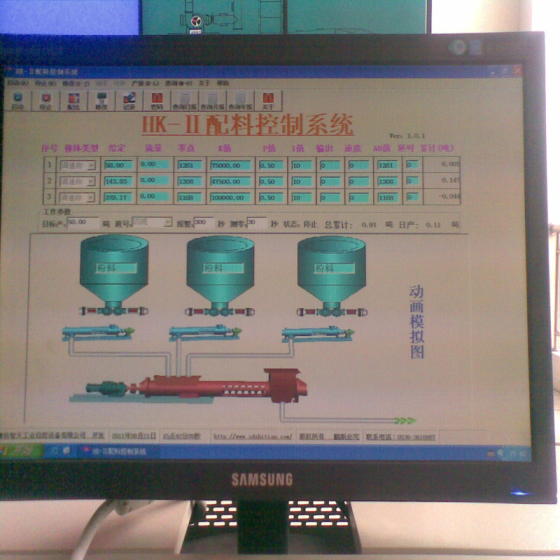
Belt Weighfeeders can be configured as a single-unit, single-channel feeding system or integrated into multi-channel proportioning applications. Multiple units can operate together, and the system can support up to 16 feeding channels for centralized proportioning control.
Through an RS-485 serial communication interface, the weighing and feeding system can be connected with an upper-level computer or plant control system. This enables DCS-based distributed control and facilitates centralized monitoring, parameter setting, data acquisition, and process management.
This flexible control architecture makes the Belt Weighfeeders suitable for both individual material feeding points and large-scale automated batching systems.
Material Feeding Device Selection
Different bulk materials have different flow characteristics, so the appropriate feeding device should be selected according to material properties and process requirements.
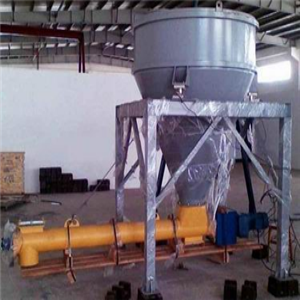
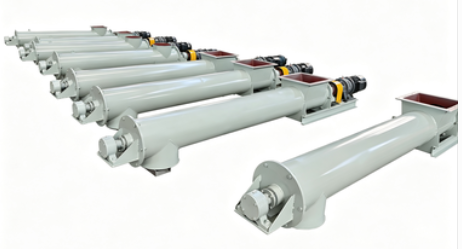
The standard feed hopper is suitable for most free-flowing bulk materials. For powdery materials with poor flowability or materials that tend to discharge in a falling and unstable manner, an impeller feeder or screw feeder can be selected to improve feeding stability.
For sticky materials or materials that are prone to bridging and arching, a vibrating hopper or electromagnetic vibrating feeder can be used. For special material characteristics or unusual process conditions, a customized feeding solution can be designed according to the customer's requirements.
Applications of the Belt Weighfeeders
TDG Series Belt Weighfeeders are designed for applications requiring continuous, quantitative, and controllable feeding. Typical industries include:
Cement plants and cement raw material systems
Mining and mineral processing
Metallurgical production
Coal and coke handling
Fertilizer production
Power plants
Sintering plants
Tobacco processing
Industrial batching and proportioning systems
The combination of accurate weighing, variable-speed control, automatic belt tensioning, and automatic belt alignment allows these Belt Weighfeeders to adapt to demanding industrial production environments.
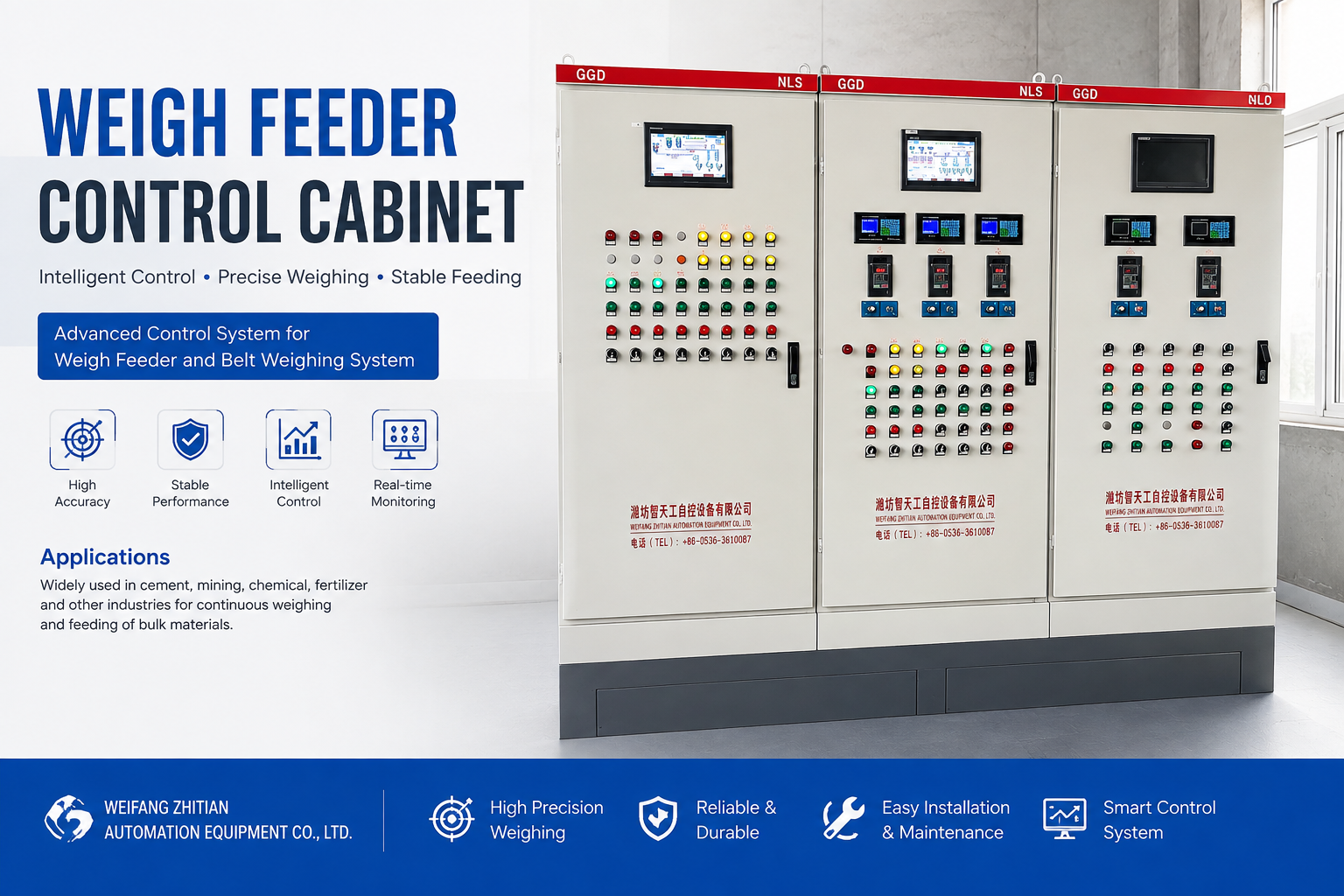
Why Choose TDG Series Belt Weighfeeders?
The TDG Series integrates weighing, feeding, speed measurement, and automatic control into one reliable system. Its dual weighing idlers improve measurement performance, while high-precision load cells provide stable weighing signals.
The rugged steel frame, skirted belt, automatic tensioning system, automatic belt alignment device, and dedicated drive reducer further improve mechanical reliability. At the same time, variable-frequency speed control provides flexible regulation of material flow.
With weighing accuracy better than ±0.5%, flexible single- or multi-channel operation, and RS-485 communication for DCS integration, TDG Series Belt Weighfeeders provide an economical and reliable solution for continuous material feeding and automated proportioning.
Technical Advantages
High weighing accuracy: ±0.5%.
Reliable load cells: High-precision stainless-steel tension-compression sensors provide low drift, excellent repeatability, and strong overload resistance.
Strong mechanical structure: The bent steel plate frame is durable, stable, and suitable for long-term industrial operation.
Stable belt operation: Automatic belt tensioning and belt alignment systems help maintain reliable conveyor performance.
Variable-speed control: Frequency conversion technology enables flexible adjustment of feeding capacity.
Flexible system configuration: The system supports single-channel operation, multi-channel proportioning, and up to 16 feeding channels.
DCS communication: RS-485 communication allows connection to an upper-level computer and integration into a distributed control system.
Conclusion
TDG Series Belt Weighfeeders combine accurate weighing, controlled feeding, robust construction, and intelligent control in a compact industrial system. Designed according to practical operating requirements and optimized through field experience, the TDG Series provides a reliable alternative to imported weighing feeders with an attractive cost-performance ratio.
For cement, mining, metallurgy, coal and coke, fertilizer, power generation, sintering, tobacco, and other industries, TDG Series Belt Weighfeeders can provide continuous quantitative feeding and precise material proportioning while supporting modern automated production and DCS process control.
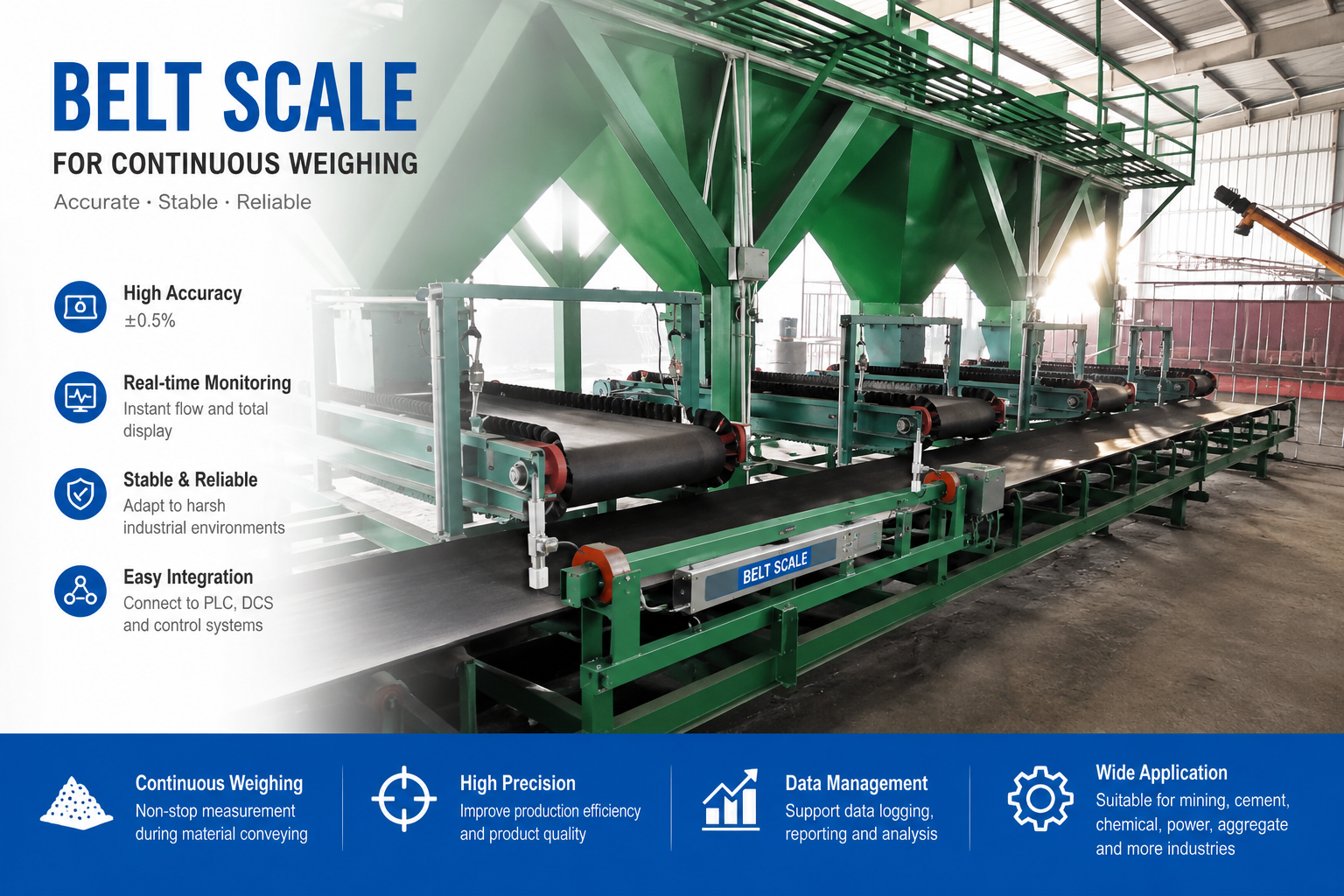
Founded: 2011
Facility Area: 10,000 m²
Annual Output Value: Over 20 million RMB
Team Size: 45 employees
Senior Engineers: 4
Professional Engineers: 15
Product Portfolio: 30+ series, 200+ models
Certifications & Compliance
ISO 9000 Quality Management System Certified
Service & Support
Pre-sales: Free material testing, engineering calculations, and site assessment
Installation & Commissioning: On-site technical guidance until stable operation is achieved
Training: Comprehensive operator and maintenance training
Warranty: 12 months standard (extended options available)
Spare Parts: Common wear parts in stock, emergency dispatch within 24 hours
Remote Service: Optional GPRS module for remote diagnostics, tuning, and firmware updates
Response Time: 2-hour response, 48-hour on-site arrival (major domestic regions)
After-Sales Service & Warranty
| Service Item | Commitment |
|---|---|
| Warranty Period | 12 months from commissioning (or 18 months from shipment, whichever comes first) |
| Response Time | Remote diagnosis within 1 hours (business hours) |
| On-site Service | Available within 24 hours (subject to location) |
| Spare Parts Availability | Guaranteed for 1 years after model discontinuation |
| Remote Support | RS485,DCS enables real-time diagnostic and calibration support |
Delivery & Logistics:
| Parameter | Specification | Note |
|---|---|---|
| Standard Model (rotor diameter ≤ 1000mm) | 1 – 2weeks | Stock components available |
| Standard Model (rotor diameter ≥ 1100mm) | 2 – 4 weeks | Subject to order confirmation |
| Custom-Engineered Model | 1 – 2 weeks | Special flange / coating / high-temp version |
| Spare Parts (wear parts) | 3 – 5 business days | Subject to stock availability |
| Expedited Shipping | Available upon request | Additional cost applies |
| Lead Time Start Point | Order confirmation + technical drawing approval | Excluding shipping time |
| Port of Loading | Qingdao/ Shanghai (China) | Alternate ports upon request |
| Standard Incoterms | FOB / CIF / EXW | Buyer's option |
FAQ – Quick Answers to Common Questions
Q1: Can it handle high-temperature materials?
A: Standard model up to 80°C.
Q2: What if my material is slightly sticky or moist?
A: Our variable-pitch airlock handles up to 20% moisture for most powders. For sticky materials, we recommend an optional internal coating or polishing treatment.
Q3: How is calibration performed on-site?
A: You can perform online material calibration (preferred), or use span check with a known weight. Remote calibration is also supported without an on-site visit.
Q4: Do you provide installation and commissioning?
A: Yes. We offer supervision service — our engineer will guide your team through installation, startup, and performance testing .
Q5: What if I need a custom capacity or flange size?
A: We provide custom engineering for rotor diameter, inlet/outlet connections, and motor options — just specify your requirements in the inquiry.