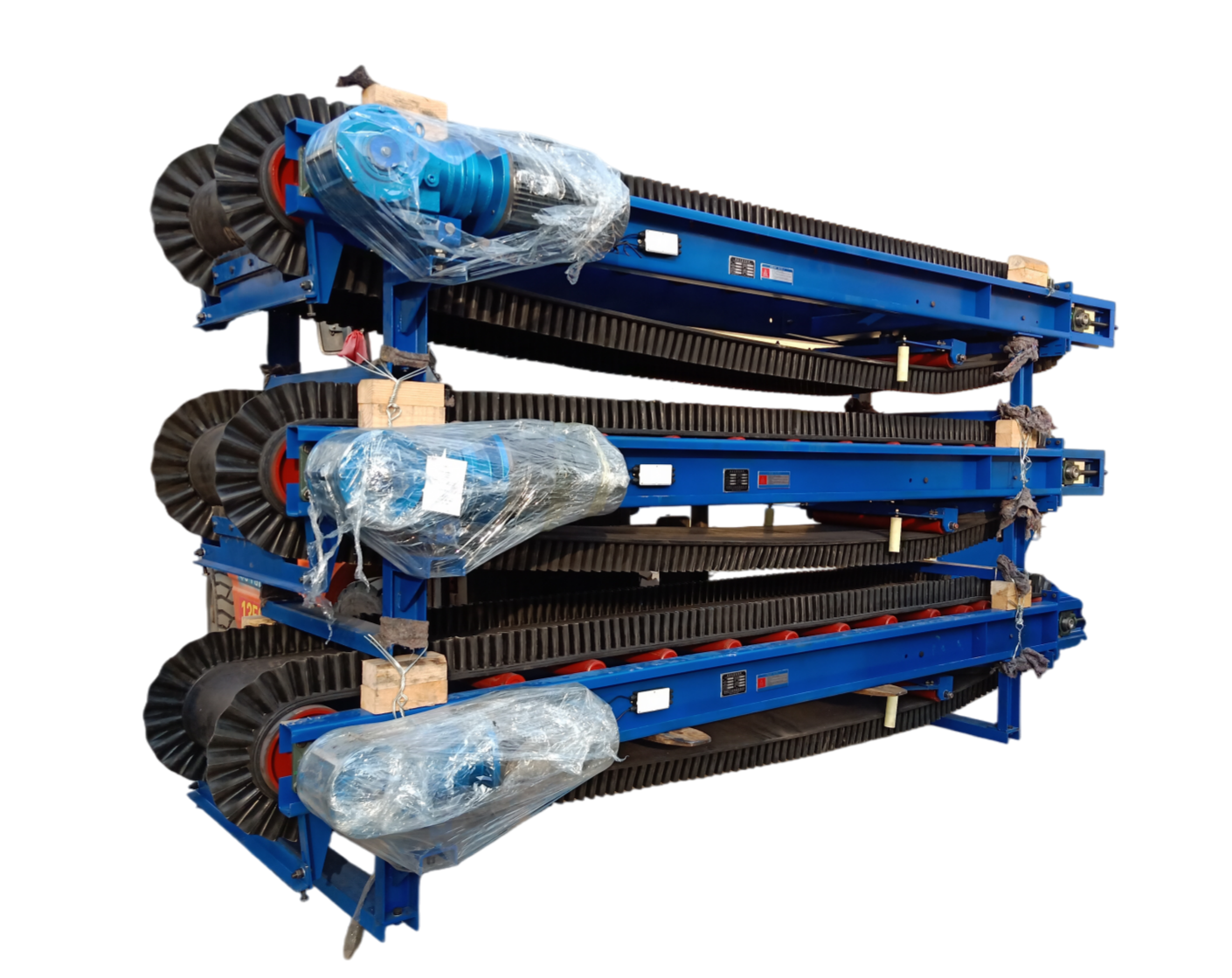



What Is the Main Difference Between a Conveyor and a Belt Feeder?
2026-08-27 16:40In bulk material handling systems, conveyors and belt feeders may look similar because both use a belt to transport materials. However, they perform different functions in a production line. Understanding the difference between a conveyor and a belt feeder is important when selecting equipment for mining, cement, coal, chemical, metallurgy, grain, and other industries.
Conveyor vs. Belt Feeder: Different Functions
The main difference is their primary purpose.
A conveyor is mainly designed to transport bulk materials from one location to another. It focuses on moving materials efficiently over a certain distance. Belt conveyors are commonly used for horizontal or inclined transportation between storage areas, processing equipment, stockpiles, and loading points.
A belt feeder, on the other hand, is mainly designed to extract and continuously feed material from a hopper, silo, bunker, or storage bin at a controlled rate. It not only moves material but also controls the material flow into the next process.
In simple terms:
Conveyor = material transportation
Belt feeder = material extraction + controlled feeding
Why Is a Belt Feeder Different from a Conveyor?
A belt feeder normally operates directly beneath a storage or feeding point. Its belt receives material from a hopper or bin and regulates the discharge rate according to production requirements.
For example, if a cement plant needs to continuously supply limestone to a crusher or grinding system, simply using a conveyor may not provide accurate material flow control. A belt feeder can control the feeding rate and provide a stable material supply to the downstream equipment.
A belt feeder is therefore particularly suitable for applications where constant, adjustable and controlled feeding is required.
Key Differences Between Conveyor and Belt Feeder
ItemConveyorBelt Feeder
Main FunctionMaterial transportationMaterial extraction and controlled feeding
Typical LocationBetween processing or storage areasDirectly below hopper, silo or bunker
Material Flow ControlUsually limitedDesigned for controlled flow
Load ConditionGenerally uniformDesigned for heavy loading at feed point
Belt DesignOptimized for conveying distanceOptimized for receiving and extracting bulk material
ApplicationLong-distance or transfer conveyingFeeding crushers, mills, screens and production lines
Speed ControlMay be fixed or variableUsually variable for flow control
Weighing FunctionOptionalCan be integrated with weighing systems
Belt Feeder for Heavy-Duty Bulk Materials
One important feature of a belt feeder is its ability to handle material directly from a storage hopper. This means the equipment may be subjected to considerable impact and pressure at the loading point.
For this reason, belt feeders are often designed with a stronger frame, heavy-duty belt, reinforced rollers and suitable drive systems. They can be used for materials such as limestone, coal, iron ore, clinker, aggregates, slag and other bulk materials.
In demanding applications, a belt feeder can provide reliable material extraction while maintaining stable feeding to downstream equipment.
When Should You Choose a Conveyor?
A conveyor is generally the better choice when the main requirement is to move material over a distance.
Typical applications include:
Transferring crushed ore between production processes
Moving limestone to a stockpile
Transporting coal to different areas of a power plant
Conveying clinker or aggregates
Loading and unloading bulk materials
Connecting different production machines
If material has already been discharged from a hopper and simply needs to be transported, a conveyor is often sufficient.
When Should You Choose a Belt Feeder?
A belt feeder is more appropriate when material needs to be continuously extracted from a storage unit and supplied at a controlled rate.
Typical applications include:
Hopper discharge
Silo feeding
Crusher feeding
Mill feeding
Raw material dosing
Coal feeding
Limestone feeding
Ore feeding
Continuous production lines
For production processes that require stable material flow, a belt feeder can provide much better control than a conventional conveyor.
Can a Belt Feeder Also Weigh Materials?
Yes. A belt feeder can be integrated with a weighing system to create a weigh belt feeder or belt weigh feeder.
The system can continuously measure material flow while controlling belt speed. This allows operators to monitor instantaneous feeding capacity and accumulated material quantity.
A weighing belt feeder is particularly useful when the production process requires both accurate feeding and continuous measurement, such as cement batching, coal feeding, mineral processing, chemical production and other industrial applications.
Conveyor or Belt Feeder: Which One Is Better?
Neither equipment is universally better. The correct choice depends on the actual application.