


- Home
- >
- News
- >
- What Is an Air Slide?
- >
What Is an Air Slide?
2026-09-04 14:42What Is an Air Slide?
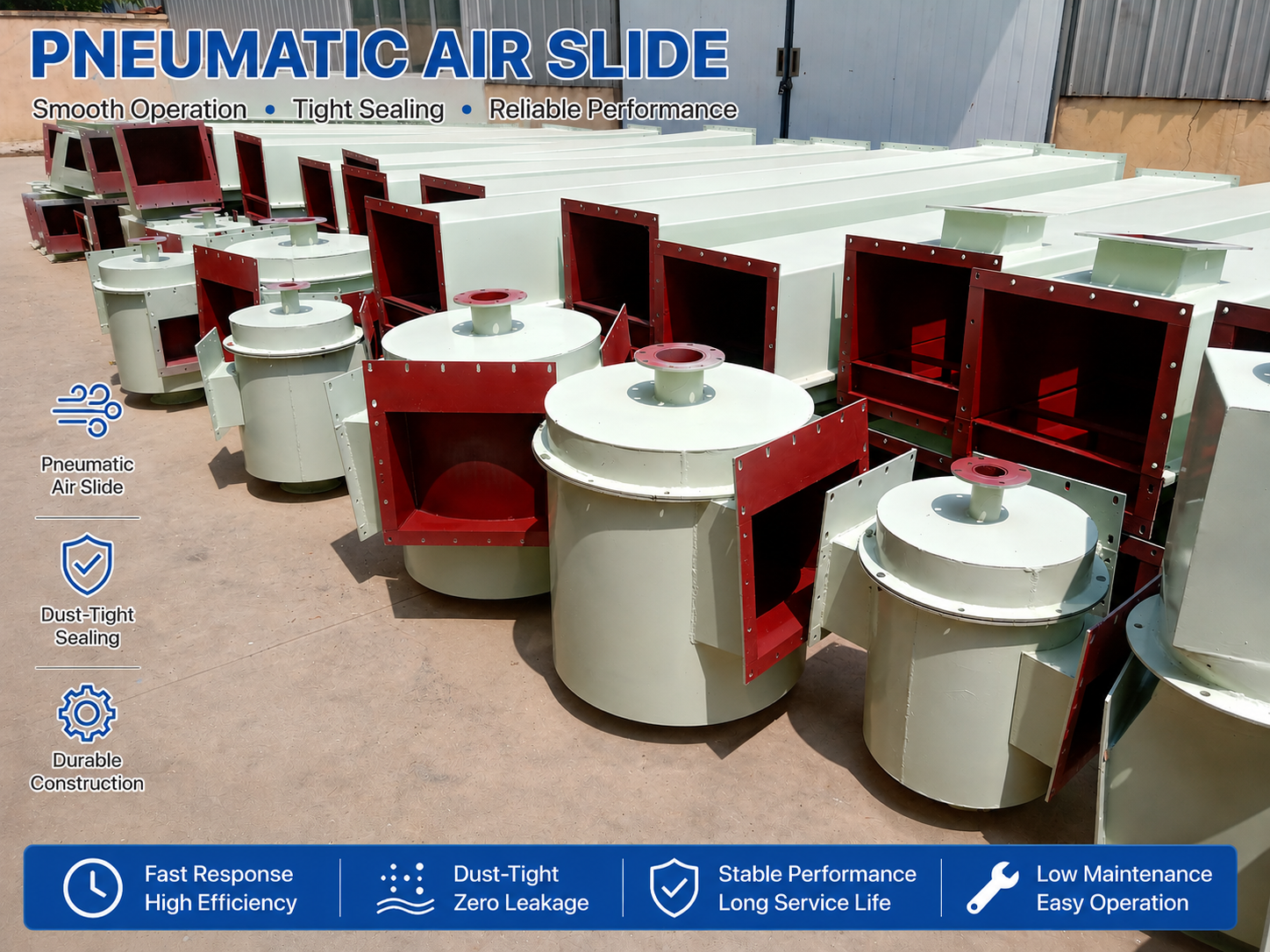
An Air Slide, also known as a Pneumatic Air Slide Conveyor or Air-Slide Conveyor, is a continuous conveying system designed to transport dry, fine and powdery bulk materials by using low-pressure air. It is widely used in cement plants, mineral processing, chemical plants, power plants and other industries where reliable and enclosed powder conveying is required.
Unlike traditional mechanical conveyors, an air slide has no rotating conveying parts inside the material channel. Air passes through a porous fabric or aeration membrane, fluidizing the powder and allowing the material to move smoothly along an inclined conveying surface.
How Does an Air Slide Work?
The working principle of an air slide is based on fluidization technology. When low-pressure air is introduced through the bottom of the air slide, it passes through the aeration fabric and enters the powder material.
The airflow reduces friction between individual particles and between the material and the conveying surface. As a result, the powder behaves similarly to a fluid and can flow forward under gravity when the air slide is installed at a suitable angle.
This simple conveying principle makes the air slide conveyor especially suitable for dry powders with good fluidity, such as cement, fly ash, raw meal, lime powder, alumina and other fine bulk materials.
Main Structure of an Air Slide
A typical air slide system consists of several key components, including the conveying trough, aeration fabric, air chamber, inlet and outlet, inspection ports and supporting structure.
The aeration fabric is one of the most important components. It separates the conveying material from the air chamber while allowing air to pass through evenly. Proper air distribution helps maintain stable material fluidization and efficient conveying.
Depending on the project requirements, the air slide can be supplied with different lengths, widths, materials and installation configurations. Customized designs are available for different conveying capacities and plant layouts.
Advantages of Air Slide Conveyor
1. Simple and Reliable Design
An air slide has very few moving components. Since there is no internal chain, screw, belt or rotating rotor, mechanical wear is significantly reduced. This helps improve operational reliability and reduce maintenance requirements.
2. Low Energy Consumption
The system uses relatively low-pressure air to fluidize the powder. Compared with many mechanical conveying systems, an air slide can provide an energy-efficient solution for transporting suitable dry powder materials.
3. Low Maintenance
Because the conveying process does not rely on rotating mechanical components, there are fewer wear parts inside the conveying channel. Routine maintenance mainly focuses on the aeration system, fabric condition, air supply and sealing components.
4. Enclosed Powder Conveying
An air slide conveyor provides an enclosed conveying route, helping reduce material leakage and dust emissions. This makes it suitable for modern plants where clean production and environmental control are important.
5. Smooth Material Flow
The aeration process reduces material friction and allows fine powder to move smoothly. Properly designed air distribution can help minimize blockages and maintain stable conveying performance.
6. Flexible Installation
Air slides can be installed horizontally or with a slight inclination depending on material characteristics and process requirements. Their compact structure also makes them suitable for conveying materials between silos, bins, mills, filters and other process equipment.
What Materials Can an Air Slide Convey?
An Air Slide is mainly designed for dry, fine and relatively free-flowing powder materials.
Typical applications include:
Cement
Cement raw meal
Fly ash
Pulverized limestone
Mineral powder
Alumina
Gypsum powder
Coal ash
Chemical powders
Other dry fine bulk materials
The actual conveying performance depends on material particle size, moisture content, bulk density, flowability and other physical properties. Therefore, material characteristics should be considered when selecting the air slide design.