


What is a conveyor scraper?
2026-09-16 15:51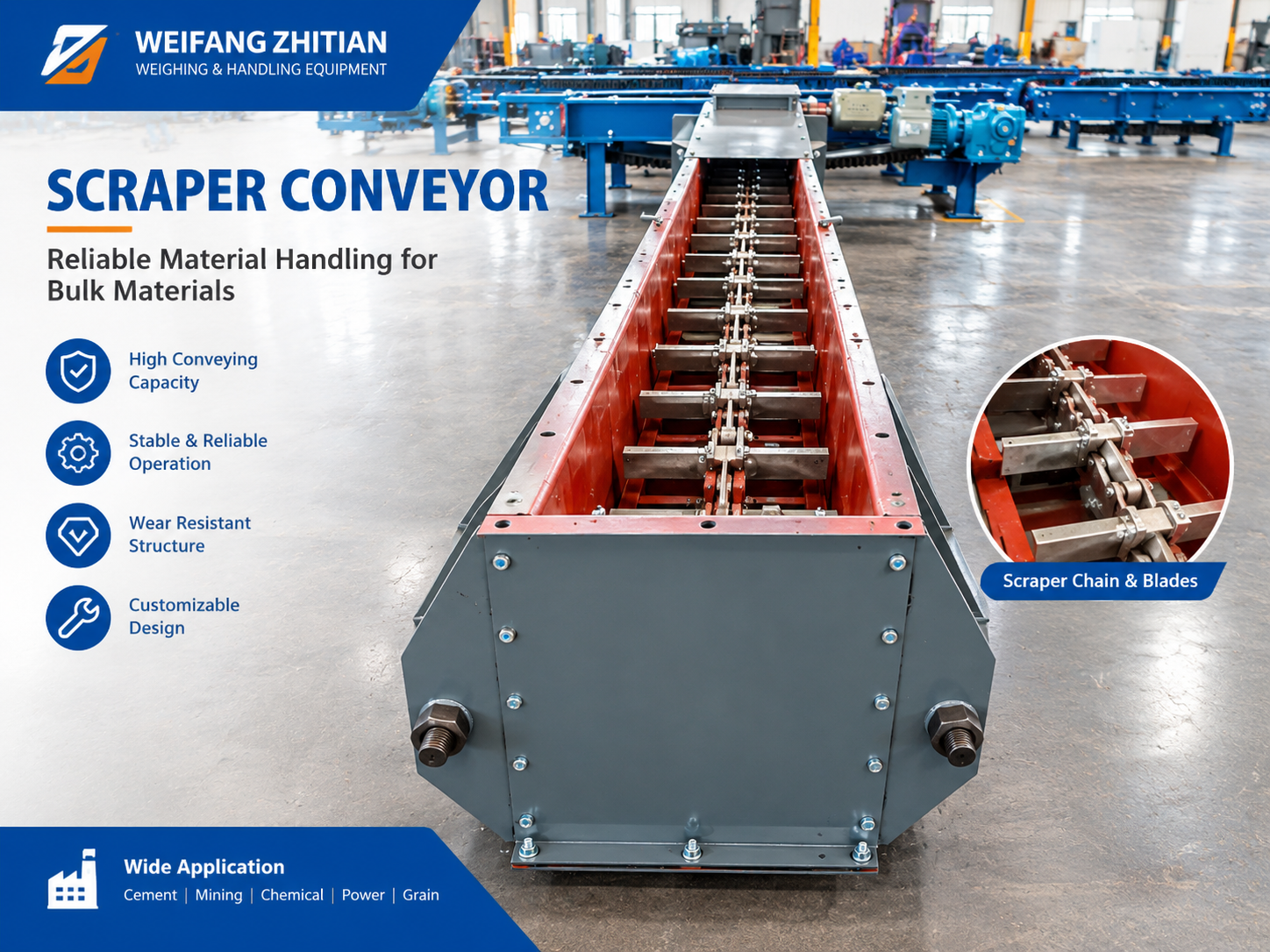
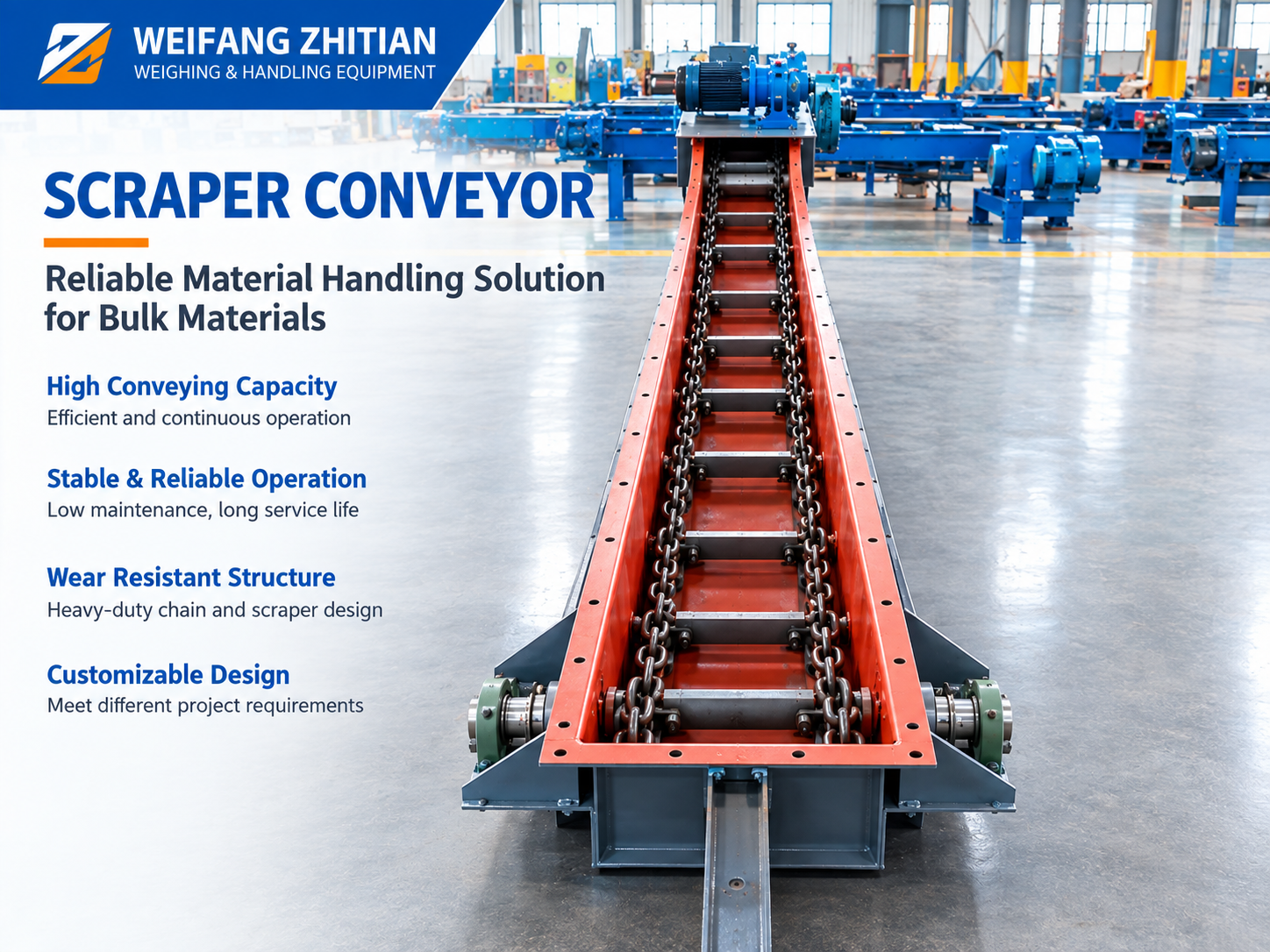
A conveyor scraper is a mechanical conveying device that uses scraper flights or chains to move bulk materials continuously along a fixed trough or enclosed channel. Unlike a conventional belt conveyor, a conveyor scraper pushes or drags the material forward rather than carrying it on a moving belt.
How Does a Conveyor Scraper Work?
A typical conveyor scraper consists of a drive system, chain, scraper flights, conveying trough, tail section, and tensioning device. The motor drives the chain, while the scraper flights move along the trough and push bulk materials toward the discharge point.
6
What Materials Can a Conveyor Scraper Handle?
A conveyor scraper is commonly used for transporting:
Coal and coke
Limestone and cement raw materials
Fly ash and other powdery materials
Ore and mineral materials
Fertilizer
Grain and other granular products
Industrial waste and abrasive bulk materials
Advantages of a Conveyor Scraper
A conveyor scraper provides a compact solution for continuous bulk-material handling. The enclosed or semi-enclosed conveying structure can help reduce material spillage and dust compared with some open conveying arrangements. The chain-and-scraper design is also suitable for applications where the material is heavy, abrasive, or difficult to handle with conventional belt equipment.
For cement, mining, chemical, fertilizer, power and other industries, a scraper conveyor can be integrated with feeders, crushers, storage bins, weighing systems and other process equipment.
Conveyor Scraper vs. Belt Conveyor
The main difference is the conveying principle:
| Feature | Conveyor Scraper | Belt Conveyor |
|---|---|---|
| Conveying method | Scraper flights push material | Moving belt carries material |
| Main component | Chain + scraper | Conveyor belt |
| Typical material | Heavy, abrasive, bulk materials | Bulk and packaged materials |
| Structure | Usually enclosed/contained | Usually open |
| Application | Heavy-duty material handling | General material transport |
For industrial material handling, the appropriate conveyor type depends on material characteristics, capacity, conveying distance, installation angle and operating conditions.