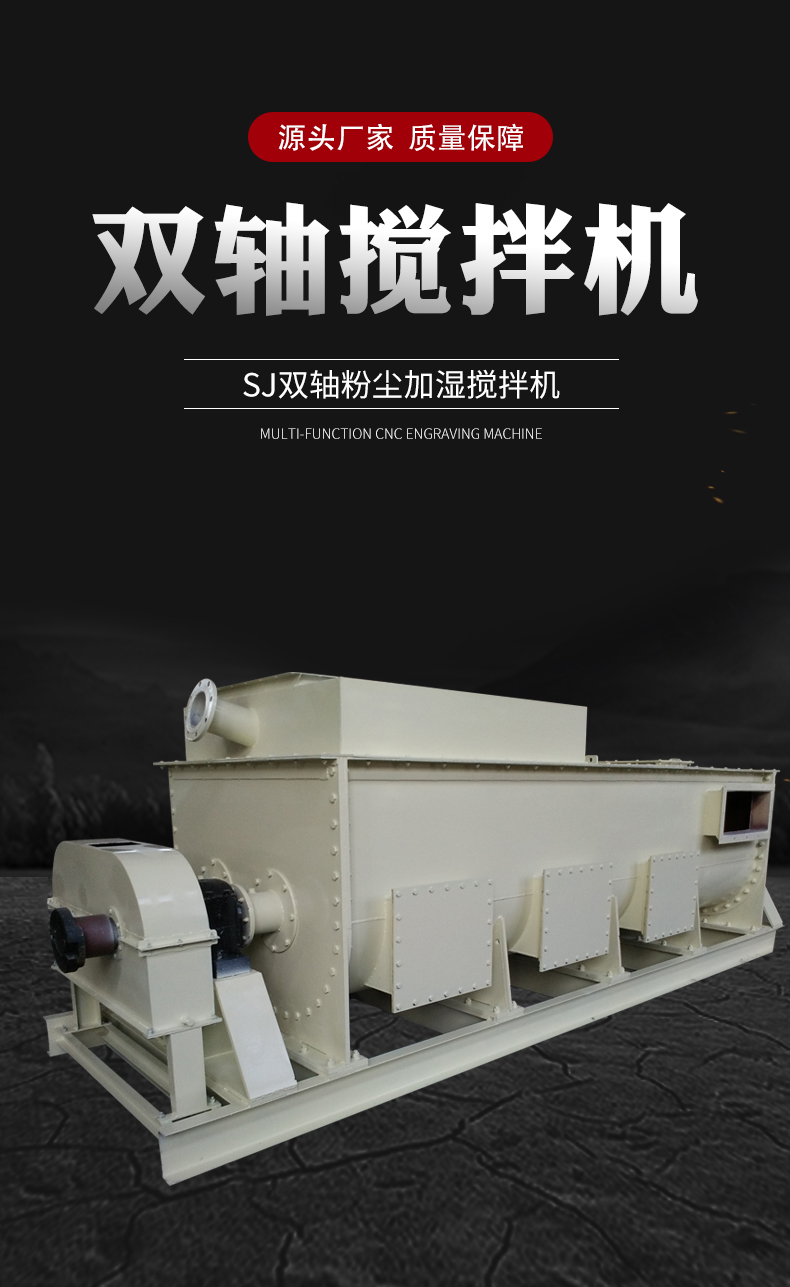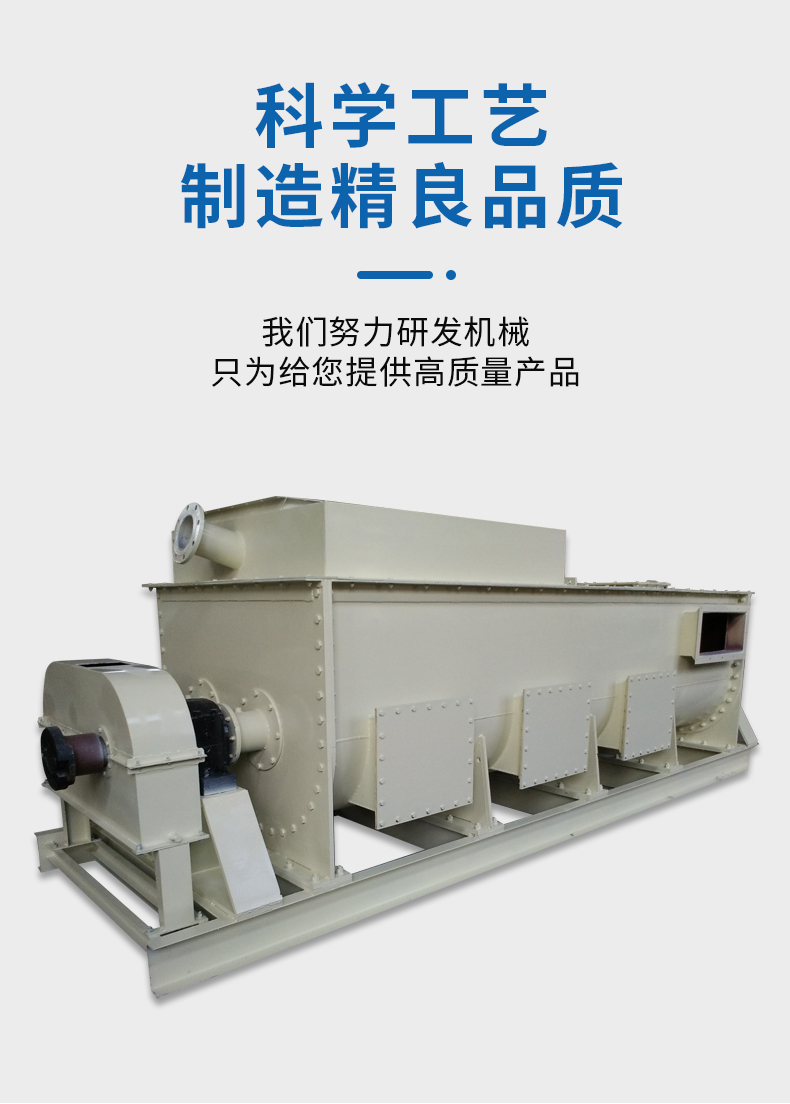



Pneumatic and mechanical composite mixer
2026-07-16 17:19I.Pneumatic and mechanical composite mixer Overview
In recent years, with the continuous development of building material technology, new technologies the building material industry have continuously emerged. Slag ultra-fine powder, as a technical highlight in the cement industry, has attracted the attention of the entire industry. Due to the development its deep potential, it is rapidly changing the original grinding process. Technologies such as the re-blending process of ultra-fine powder in cement and the blending process of clinker powder ultra-fine powder have emerged accordingly. New processes inevitably require new technical equipment to ensure their implementation, and therefore various types of cement mixers have begun to appear.
Existing cement are mainly divided into two types: mechanical and pneumatic. Mechanical mixers are further divided into single-shaft and double-shaft types. The characteristics of mechanical mixers are that the mixing is uniform and reliable, but the power consumption is high, the wear and tear of components is severe, and the consumption per unit of mixing volume is large. In addition, a specialized process is required. Pneumatic mixers include forms such as airflow mixing and gasification mixing. Their characteristics are: fast mixing, low power consumption, and low component wear, but their disadvantages are the material is affected by gas short-circuiting, eddy currents, and wall effects. The uniformity of mixing is lower, and a specialized process layout is also required. Therefore, mixers have all exposed their limitations in actual production.
The new cement pneumatic-mechanical composite mixer developed by our company was developed on the basis of summarizing the advantages of mechanical and pneumatic. It not only has the characteristic of uniform mixing of mechanical mixers, but also the characteristics of fast mixing, low power consumption, and low component wear of pneumatic mixers. Especially in terms process layout, it does not require a specialized process route, and can be installed and used with only slight modifications to the bypass of the conveying equipment. After being used by multiple cement, it has received high praise from users.
II. Pneumatic and mechanical composite mixer Characteristics
1. Uniform and reliable mixing. It adopts an overflow structure and has a large online mixing capacity.
2. power consumption, with energy consumption per cubic meter of mixed powder less than 0.16 kWh. (See Table 1)
3. Low equipment wear, with no need replace wear parts within a year.
4. Simple process layout, requiring no specialized process line. (See Figure 1)
5. Large mixing capacity, ranging from 0 to 500 m³/h.
6. Effectively removes granular objects (slag) from the powder material.
7. Good homogenization effect, with a standard deviation ≤ 1.2%.
III. Pneumatic and mechanical composite mixer Requirements for the Mixed Materials
1. Must be powder material, with a fineness below 15%.
2. Moisture content than 1.5%.
3. Bulk density below 2*10³ kg/m³.
4. No viscosity.
5. Accurate feeding measurement.
IV Pneumatic and mechanical composite mixer Working Principle
The bottom of the mixing tank, which is equipped with a stirring shaft and blades, is fitted with an aeration box containing a breathable layer. High-pressure air is into the aeration box by a Roots blower. When the material enters the mixing tank, it is first fluidized by the gasification effect of the aeration box at the bottom of the mixing tank and then aerated and stirred by the action of the stirring shaft blades in the mixing tank. Since the discharge outlet is located at the upper part of the mixing tank, the mixed overflows from the discharge outlet. The material below the discharge outlet is mixed again with the subsequent material entering the mixing tank before overflowing from the discharge outlet. Due to the full fluidization the material in the mixing tank, combined with the overflow structure of the material, the granular objects (slag) of the material will deposit at the bottom of the mixing tank. When mixer needs to be stopped after working for a certain period, the slag can be cleared out from the slag discharge port at the lower side of the mixing tank.