


Belt Scale Quantitative Feeder Product Details
2026-09-08 16:16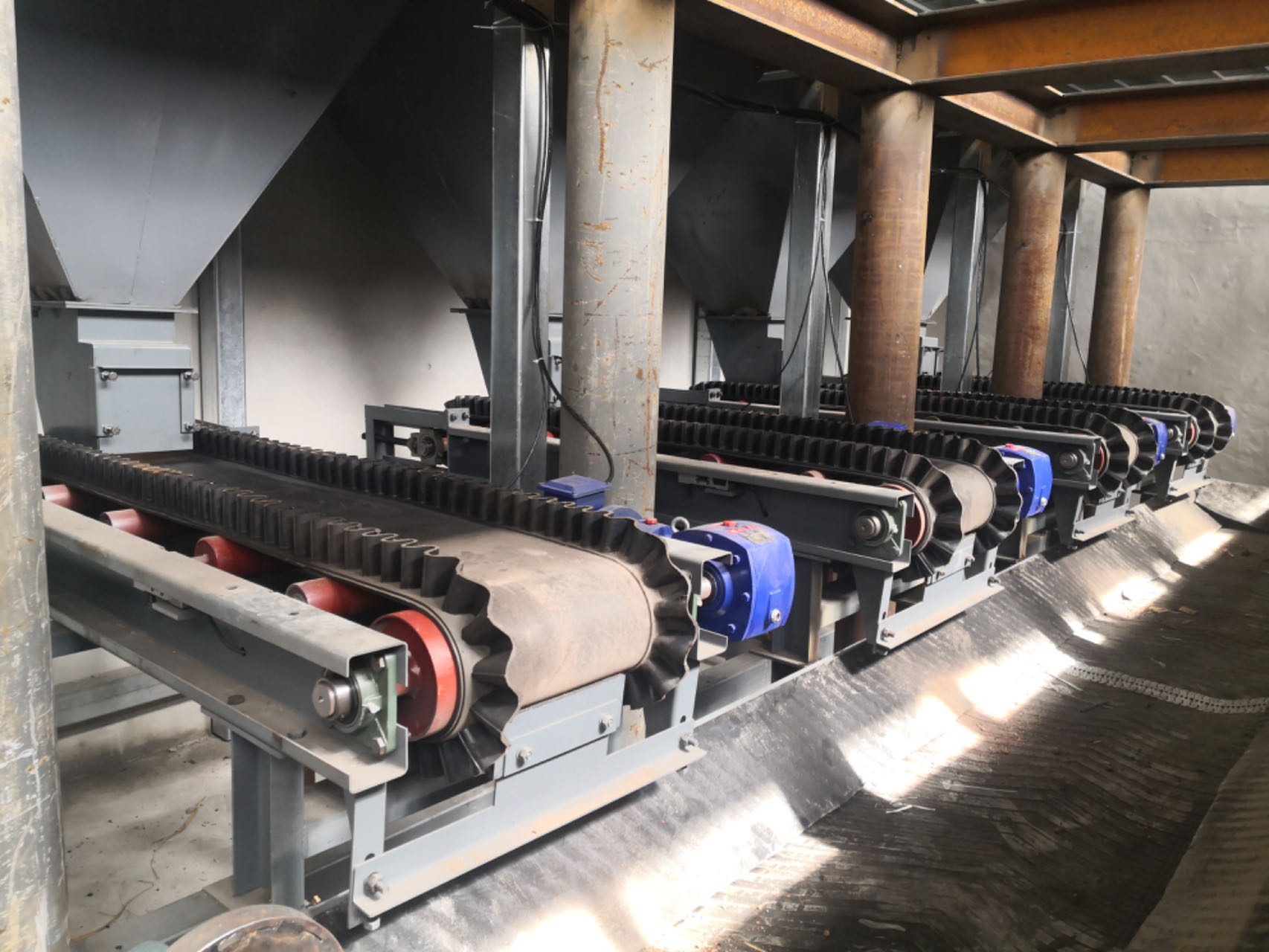
I. Product Overview
The belt scale quantitative feeder is an intelligent industrial conveying and metering device integrating continuous material conveying, dynamic precision weighing, and automatic quantitative batching. It is specifically designed for powdery, granular, and small lump bulk materials. Relying on high-precision dynamic weighing technology and a frequency conversion intelligent control system, the equipment can monitor the instantaneous flow rate and cumulative conveying volume of materials in real time, automatically calibrate and adjust the feeding speed, and achieve constant, uniform, and quantitative material conveying. This completely solves the industry pain points of traditional manual feeding, such as low accuracy, material waste, imbalanced proportions, and low production efficiency. It is widely applicable to various industrial automated batching production lines and is a core supporting equipment for refined production, energy saving, and intelligent management in industrial and mining enterprises.
II. Working Principle
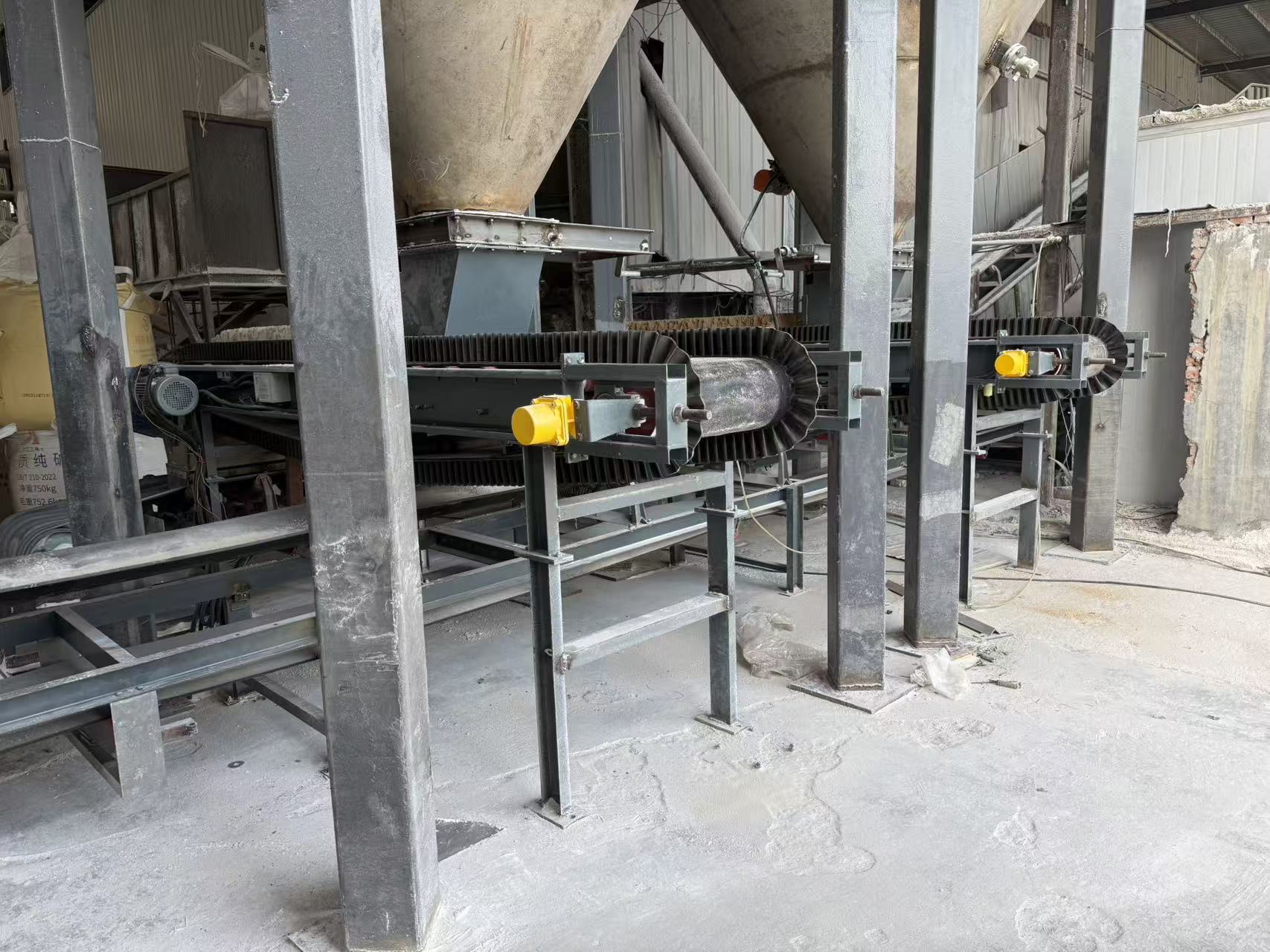
The equipment consists of a weighing bridge, high-precision weighing sensors, speed sensors, a frequency conversion drive system, intelligent control instruments, and a frame belt system. During operation, the belt carries the material at a uniform speed. The weighing sensors collect the material weight signal in real time, and the speed sensors simultaneously capture the belt speed signal. Both signals are transmitted to the intelligent control system in real time. The system accurately calculates the instantaneous flow rate and cumulative conveying volume of materials through a core algorithm, and automatically compares it with preset batching parameters. It dynamically adjusts the belt speed in real time through frequency conversion speed regulation, dynamically correcting the feeding amount. The entire process is closed-loop controlled, maintaining stable material feeding accuracy at all times, achieving fully automatic, uninterrupted, and high-precision quantitative feeding operations. III. Core Product Advantages
1. Precise Measurement, Controllable Error
Equipped with high-precision weighing sensors and employing dynamic weighing verification technology, the dynamic measurement accuracy is stably controlled within ±0.5%~±1.0%, with even higher static accuracy, meeting industrial high-precision batching production standards. The equipment supports long-term continuous operation, with stable and drift-free measurement data, effectively ensuring the accuracy of material proportioning on the production line and improving finished product quality.
2. Frequency Conversion Speed Regulation, Wide Adaptability
Utilizing an intelligent frequency conversion speed regulation control system, the belt speed can be flexibly adjusted, and the feeding flow rate adjustment range is wide, supporting multiple quantitative output levels from 0.5-200t/h. Feeding parameters can be freely set according to production process requirements. Whether for small-flow precision batching or large-flow continuous conveying, it can be smoothly adapted to various production conditions. 3. Stable operation, leak-proof and spill-proof: The entire machine adopts a reinforced carbon steel powder-coated frame, with a stable structure, strong load-bearing capacity, and no shaking or deviation during operation. Equipped with a dedicated annular skirted rubber belt, it effectively prevents spillage, leakage, and dust generation during the conveying of powdery and fine granular materials, reducing material loss, improving the workshop production environment, and boasting a low equipment failure rate, allowing for 24-hour continuous operation. 4. Intelligent linkage, high degree of automation: Equipped with intelligent digital display control instruments, it intuitively displays real-time data such as instantaneous flow rate, cumulative output, and operating parameters, making operation simple and convenient. It supports 4-20mA analog signals and RS485 communication, seamlessly connecting to the factory's DCS automation control system to achieve remote monitoring, parameter adjustment, and data traceability, adapting to the production needs of modern smart factories. It also features a built-in fault alarm function, automatically alerting users to equipment malfunctions for timely troubleshooting and maintenance. 5. Durable and easy to maintain, supports non-standard customization. Core components are made of selected industrial-grade materials, wear-resistant, corrosion-resistant, and anti-aging, adaptable to complex working environments from -20℃ to +60℃. The overall protection rating is IP54, upgradable to IP65, with excellent dustproof and waterproof performance. The equipment has a simple structure, is easy to disassemble and maintain, and has low daily maintenance costs. It also supports non-standard customization of belt width, body material, conveying flow rate, and installation method to meet the different on-site production needs of users. IV. Applicable Materials and Industries Applicable Materials: Coal powder, mineral powder, limestone, sand, fly ash, cement, organic fertilizer, chemical powder, grain pellets, and other powdery, granular, and small blocky bulk materials. Applicable Industries: Widely used in cement and building materials, thermal power generation, mining and metallurgy, chemical manufacturing, environmental desulfurization, organic fertilizer processing, grain processing, concrete mixing plants, and other major industrial fields. It is a core supporting equipment for automated batching, continuous conveying, and precise metering. V. Equipment Value The belt scale quantitative feeder replaces the traditional manual and extensive feeding mode, realizing fully automated and intelligent operation of material conveying, metering, and batching. It can accurately control the material ratio, stabilize product quality, and reduce material waste, while significantly reducing labor costs, improving the automation level and production efficiency of the production line, and helping enterprises achieve refined production management, energy saving and consumption reduction, and quality and efficiency improvement.