


How does a weigh feeder work?
2026-09-22 15:22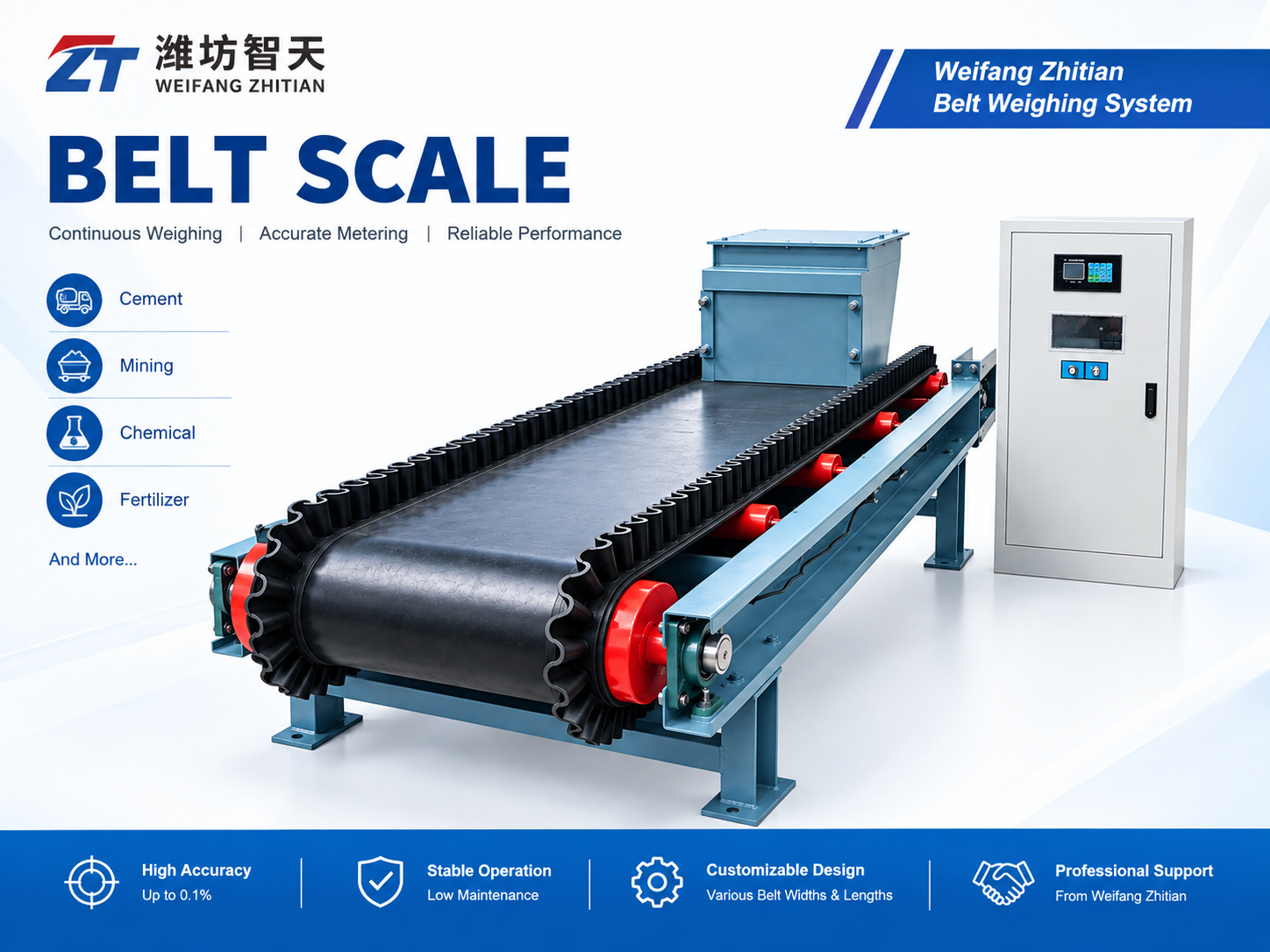
How Does a Belt Weigh Feeder Work?
A belt weigh feeder combines material conveying, continuous weighing, and controlled feeding in one system. Weifang Zhitian designs belt weigh feeders for continuous measurement and quantitative feeding of bulk and granular materials in cement, mining, metallurgy, coal, fertilizer, chemical, power plant, and other industries.
Unlike a conventional belt conveyor, a belt weigh feeder continuously measures the material loaded on the belt and adjusts the belt speed according to the required feeding rate. This makes the equipment suitable for applications where stable and controlled material flow is important.
How Does a Belt Weigh Feeder Work?
The working principle of the Weifang Zhitian belt weigh feeder is based on two main signals: material weight and belt speed.
As material enters the feeder, the material is transported across the weighing section. Weighing sensors detect the load carried by the belt, while a speed sensor continuously measures belt speed.
The weight signal and speed signal are transmitted to the weighing and control system. The controller calculates the instantaneous material flow rate and compares the actual flow with the preset feeding value.
When the actual flow is lower than the target, the control system increases belt speed. When the actual flow is higher than the target, the system reduces belt speed through the variable-frequency drive.
This continuous feedback process allows the belt weigh feeder to maintain a stable material feeding rate.
Weifang Zhitian Belt Weigh Feeder Structure
A typical Weifang Zhitian belt weigh feeder includes:
Feeding hopper
Conveyor belt
Weighing frame
Weighing sensors
Speed sensor
Drive motor
Variable-frequency drive
Belt tensioning system
Belt tracking system
Belt cleaning devices
Weighing and control instrument
Electrical control cabinet
Weifang Zhitian's DEL/DEM quantitative feeder uses a steel frame and a direct weighing structure with dual sensors. The design is intended to reduce measurement errors caused by uneven material loading and improve weighing stability. The product information also describes belt tensioning and automatic belt tracking functions for long-term operation.
Weight Measurement and Belt Speed Measurement
The weighing section is one of the key components of a belt weigh feeder.
When material passes over the weighing section, the weighing sensors detect the vertical load. At the same time, the speed sensor measures the actual belt velocity.
The controller combines these two measurements to calculate material flow:
Material Flow = Belt Load × Belt Speed
The accumulated material quantity can also be calculated continuously during operation.
Weifang Zhitian's published belt weighing technology uses digital speed measurement and weighing signals for continuous flow calculation and control. The control system compares the actual flow rate with the preset value and regulates belt speed accordingly.
Variable-Frequency Speed Control
Variable-frequency speed control is an important part of the Weifang Zhitian weigh feeder.
The feeder does not simply operate at one fixed speed. The control system can change the motor speed according to the difference between the actual feeding rate and the target value.
For example, when the target feeding rate is increased, the controller can increase belt speed. When the target rate is reduced, the controller can decrease belt speed.
This provides a closed-loop feeding system suitable for continuous process production and automatic proportioning.
Weifang Zhitian TDG Series
The TDG series variable-frequency quantitative feeding equipment developed by Weifang Zhitian is designed for continuous quantitative feeding applications. The published product information states that the series was developed using domestic and international technology together with field experience and user feedback.
The TDG series is used in cement, mining, metallurgy, coal and coke, fertilizer, power plants, sintering plants, tobacco, and other industrial applications.
For different production requirements, the belt weigh feeder can be configured according to material characteristics, required capacity, belt width, installation conditions, and control requirements.
Measurement Accuracy and Digital Control
For industrial feeding systems, measurement stability is important because variations in material flow can affect downstream production.
Weifang Zhitian's published DEL/DEM quantitative feeder specifications list a measurement accuracy of ≤±0.5% and a control accuracy of ≤±1%. The system uses digital acquisition technology, while speed measurement can be performed using a gear speed sensor or rotary encoder.
The control system can also be connected with plant automation systems. Weifang Zhitian's belt weighing technology supports PLC and DCS-based automatic control configurations.
Belt Weigh Feeder for Cement Plants
Cement production is one of the major applications for a belt weigh feeder.
Raw materials such as limestone, coal, clinker-related materials, gypsum, and other bulk materials may need to be continuously measured and fed into different production processes.
A Weifang Zhitian belt weigh feeder can provide continuous feeding and flow monitoring while the control system adjusts the belt speed according to the required setpoint.
For multi-material proportioning systems, several feeders can be integrated into a centralized PLC or DCS control system to coordinate different material feeding rates.
Applications in Bulk Material Industries
Weifang Zhitian belt weigh feeders and weighing systems can be used for a wide range of bulk and granular materials.
Typical industries include:
Cement and building materials
Mining and mineral processing
Coal and coke
Metallurgy
Fertilizer
Chemical processing
Power plants
Sintering plants
Grain and other bulk material applications
The actual feeder configuration should be selected according to material density, particle size, moisture, flowability, required capacity, belt width, and process layout.
Why Choose a Weifang Zhitian Belt Weigh Feeder?
Weifang Zhitian focuses on industrial weighing, feeding, conveying, and process control equipment. The company's product range includes electronic belt scales, quantitative feeders, screw weighing systems, rotor scales, and other bulk material measurement equipment.
A Weifang Zhitian belt weigh feeder can be configured with:
Continuous dynamic weighing
Variable-frequency belt speed control
Digital weighing and speed measurement
Automatic feeding control
Belt tensioning and tracking
Belt cleaning equipment
PLC/DCS communication
Customized dimensions and feeding capacity
Conclusion
A belt weigh feeder works by measuring the material load on a moving belt and combining the weight signal with belt speed to calculate the actual material flow rate. The control system compares the calculated flow with the preset value and automatically adjusts belt speed to maintain the required feeding rate.
Weifang Zhitian provides belt weigh feeder and quantitative feeding solutions for cement, mining, metallurgy, coal, fertilizer, chemical, power, and other bulk material industries. With continuous weighing, variable-frequency speed regulation, and automatic control, the system can be integrated into modern material handling and process control lines.