



How Does a Screw Feeder Work?
2026-09-29 15:16Screw Feeder
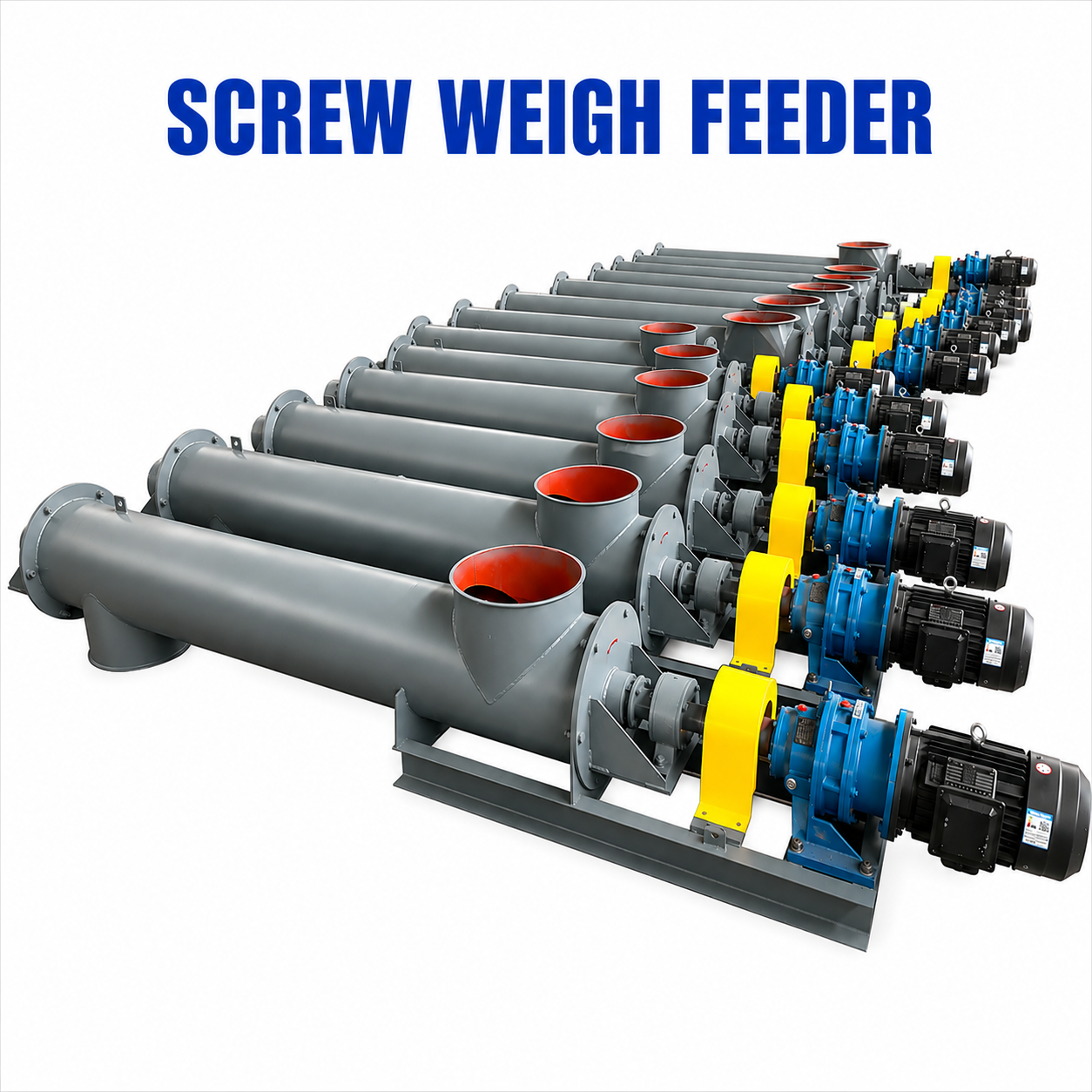
The Screw Feeder is designed for the controlled feeding and conveying of powdery and granular materials. With a compact structure and reliable screw conveying mechanism, the Screw Feeder provides stable and continuous material flow.
The Screw Feeder is widely used in cement, chemical, mining, fertilizer, food, and building material industries. Different screw diameters, lengths, capacities, and configurations can be customized according to material characteristics and production requirements.
Key Features:
Stable and continuous feeding
Compact and durable construction
Suitable for powder and granular materials
Adjustable feeding capacity
Easy installation and maintenance
Customized designs available
How Does a Screw Feeder Work?
A screw feeder uses a rotating screw (auger) inside a trough or tube to move and continuously feed bulk materials at a controlled rate.
Material enters the inlet — Powder, granules, or other bulk material is loaded into the feeder hopper.
The screw rotates — A motor and gearbox drive the screw at a controlled speed.
Material is conveyed forward — As the screw rotates, its flights push the material toward the discharge outlet.
Feed rate is controlled — Adjusting the screw speed changes the amount of material delivered per unit of time, allowing accurate and consistent feeding.
Material exits continuously — The material is discharged into the next process, such as a conveyor, mixer, crusher, or packaging machine.
The screw speed, screw diameter, pitch, and material properties all affect the feeding capacity and accuracy.
 https://www.zhitianmeteringequipment.com/product/tubular-screw-conveyor